
Historic Neighborhoods in Tokyo: Ryogoku
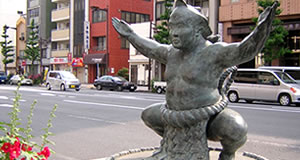
Tokyo has hidden historic areas that reflect the friendly atmosphere of the old Tokyo (Edo period), particularly in the eastern city center. One notable area is Ryogoku, famous for its Sumo wrestling culture.
Ryogoku riverside area boosted Old Tokyo's prosperity
Ryogoku is a historic area along the Sumida River, east of central Tokyo. Back when Tokyo was called Edo, this area thrived thanks to the shipping industry, which played a big role in moving all sorts of goods around. This boom turned the place into a lively entertainment district packed with theaters and teahouses. The area surrounding Ryogoku Bridge, which crosses the Sumida River, was particularly vibrant, and today a neighborhood in Sumida City retains the name Ryogoku.

Ryogoku Bridge and the Great Riverbank (Ryogokubashi Okawabata 両国橋 大川ばた) by Utagawa Hiroshige

Ryogoku Bridge over the Sumida River. The right side of the river in this photo is located in the Ryogoku area.
Ryogoku Attractions
Ryogoku is mostly known for its Sumo arena, but there’s so much more to check out that both tourists and locals will enjoy. Additionally, it’s very close to other popular spots in Tokyo, such as Akihabara, Asakusa, and Tokyo Skytree, making it easy to visit all these places in one trip.
- Ryogoku Sumo Arena
- Edo-Tokyo Museum
- The Sumida Hokusai Museum
- Kyu-Yasuda Garden
- The Japanese Sword Museum
- River Cruise by Tokyo Water Bus
- Ekoin Temple
- Sumida Triphony Hall
Ryogoku Sumo Arena 両国国技館
Ryogoku Kokugikan is the only arena in Tokyo specifically designed for Sumo wrestling. Sumo tournaments take place in Tokyo three times a year, in January, May, and September. If you visit Tokyo around this time, you can witness a traditional Sumo wrestling match.

Ryogoku Kokugikan Sumo Arena

Sumo wrestlers' name flags (Nobori) in front of the arena
Buying a ticket:
Sumo match tickets are sold on the official website (https://sumo.pia.jp/en/) and online/offline at the Sumo Information Center (https://www.kokugikan.co.jp/).
You can also buy the ticket at convenience stores.
Sumo Museum:
In the Sumo arena building, there is a Sumo museum that allows visitors to learn about Sumo wrestling. The museum is open to everybody and the admission is free. One thing to note is that the museum is only available to customers during the period when the Sumo tournaments are held at the arena.
Sumo-food Restaurants:
Around the JR Ryogoku Station, at various locations, there are many Chanko-nabe (stew-like meal prepared by Sumo wrestlers) restaurants.
Sumo Beya
In Ryogoku and the nearby area, there are many Sumo Beya (training facilities and an adjoining accommodation) for Sumo wrestlers. You might get a chance to spot Sumo wrestlers on the street near Kokugikan and Sumo Beya. It's pretty exciting to see those massive wrestlers up close. If you want to observe the morning practice of Sumo wrestlers at a Sumo Beya, you can take a tour offered by a travel agency.
Edo-Tokyo Museum 江戸東京博物館
NOTICE
Edo-Tokyo Museum is closed for major renovations during the following period: April 1, 2022, through fiscal 2026 Spring (tentative schedule)
The Edo-Tokyo Museum features remarkable exhibits that showcase the history and culture of the Edo period, which was the former name of Tokyo for over 400 years.
When you arrive at the JR Ryogoku Station by train, you will see two large buildings. One is an imposing modern style, and the other is in Japanese style. The Japanese-style building is the sumo arena, and the other remarkable building is the Edo-Tokyo Museum.
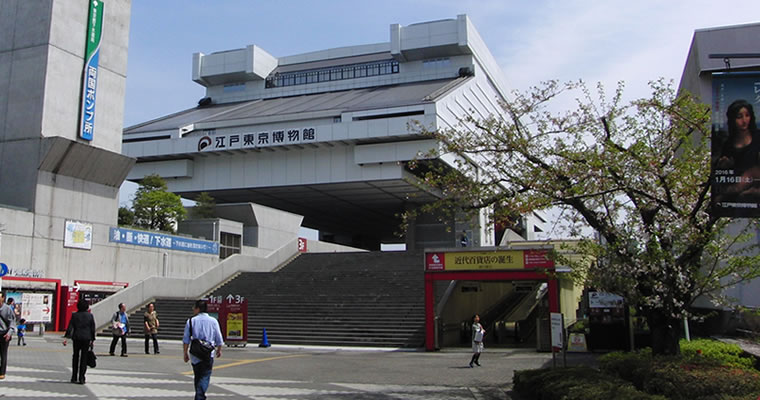
The Edo-Tokyo Museum has a contemporary design that contrasts with its historic cultural exhibitions. Inside, there are various facilities, including exhibition halls, a library, a café, restaurants, and video rooms.
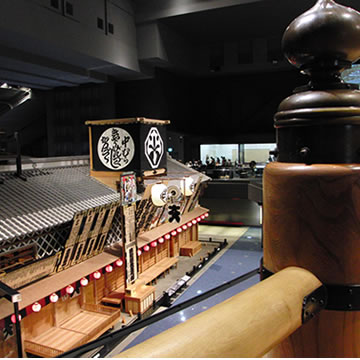
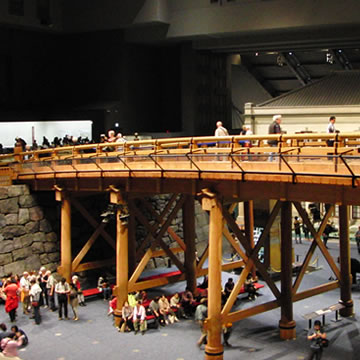
The major feature of this museum is that it displays both original crafts and full-sized replicas of buildings and other structures. These replicas are truly one-of-a-kind, including actual life-sized bridge structures and buildings. A Kabuki theater stage is on display, along with miniature models of Samurai houses. There are countless fascinating exhibits that will entertain and educate both adults and children.
The Sumida Hokusai Museum すみだ北斎美術館
The Sumida Hokusai Museum is located in Ryogoku area of Sumida City, featuring the ukiyo-e master Katsushika Hokusai (1760–1849). The exhibits of Hokusai's work include more than 1,800 items, ranging from ukiyo-e woodblock prints to drawings, sketches, and anime-style paintings.

The museum honors Hokusai's deep connections to the Sumida area, where he was born and spent the majority of his life.
Hokusai is well-known for his ukiyo-e series "Thirty-six Views of Mount Fuji (Fugaku sanjurokkei)," which includes famous pieces like "The Great Wave off Kanagawa." The series also captures spots in what’s now Sumida City.
The Sumida Hokusai Museum
https://hokusai-museum.jp/

"Viewing Sunset over the Ryogoku Bridge from the Onmaya Embankment" (冨嶽三十六景・御厩川岸より両国橋夕陽見) by Katsushika Hokusai
Kyu-Yasuda Garden 旧安田庭園
A Small Japanese garden located near Ryogoku Kokugikan. This garden was formerly a part of a feudal lord's mansion and has a history that dates back to 1691. In 1892, Yasuda Zenjirou, the founder of Yasuda Bank, became the owner, and it was donated to the Tokyo government after his death.
FYI: "Kyu" means "former" in Japanese.

The Kyu-Yasuda Garden is open to the public, and admission is free.
The opening hours vary by season;
April to September: 9:00 - 19:30
October to March: 9:00 - 18:00
Closed on Year-end and New Year holidays
The Japanese Sword Museum 刀剣博物館
This museum in Japan is all about Japanese swords. It was set up to help preserve these swords and appreciate them as amazing pieces of art and craftsmanship.

The Japanese sword exhibition room is on the third floor of the building, which is connected to a rooftop garden with a view of the Kyu-Yasuda Garden. The museum has rooms on the second floor where you can learn about sword crafting and its history.
This museum is right next to the Kyu-Yasuda Gardens, so you can easily get to it by walking through the garden.
Japanese Sword Museum
https://www.touken.or.jp/english/
River Cruise by Tokyo Water Bus
Right across from the Sumo arena, along the Sumida River, there's a spot where you can catch a water bus to Tokyo Bay. These water buses operate between Asakusa and Odaiba, starting from the "Ryogoku River Center." They make stops at various points on the way, and the specific stops can change depending on the schedule.

Ryogoku River Center
You can check the timetable and buy a ticket at the window.

Tokyo Water Bus is operated by the Tokyo Metropolitan Park Association

You can hop off at any boarding point along the route, or just enjoy a round trip going back and forth from Ryogoku.
Tokyo Metropolitan Park Association
The schedule and ticket prices are available on the website.
https://www.tokyo-park.or.jp/water/waterbus/
Ekoin Temple 回向院
In 1657, the Ekoin Temple was established by the shogun to honor the more than one hundred thousand abandoned and unclaimed remains that perished in the fire known as the "Meireki Fire." Since that time, this temple has served those without ancestry by preaching compassion for all living beings, including humans, animals, those lost at sea, and those who have been executed.
The origin of Sumo in Ryogoku
During the Edo period, the temple regularly hosted Sumo wrestling matches to raise funds for public social services. This practice continued for 76 years, until the former Ryogoku Kokugikan was built in 1909. The temple is considered the birthplace of sumo in Ryogoku, which contributed to the area’s development as a sumo town.
Ekoin Temple once had expansive grounds, and its view is captured in an ukiyo-e by Utagawa Hiroshige.
Ekoin Temple
https://ekoin.or.jp/

Ryogoku Ekoin and Moto-Yanagi Bridge (Ryogoku Ekoin Moto-Yanagibashi 両ごく回向院元柳橋) by Utagawa Hiroshige, from the series “One Hundred Famous Views of Edo (Meisho Edo hyakkei)”
Sumida Triphony Hall すみだトリフォニーホール
This music hall serves as a hub for arts and culture in eastern Tokyo. The hall is a home base for the New Japan Philharmonic Orchestra. The facility features a large hall, a small hall, and several practice rooms. The large hall seats 1,801 people, with a pipe organ, and is known for its excellent acoustics. Sumida Triphony Hall is close to JR Kinshicho Station, next to Ryogoku Station.
Sumida Triphony Hall
https://www.triphony.com/
Getting to Ryogoku area

From Akihabara
Take a train on the JR Sobu-sen Line and get off at JR Ryogoku station. (2 stops from Akihabara)
From Asakusa
Ryogoku is about 2.5km away from Asakusa, would be a 25-min walk or more.
Related information
Ryogoku Tourist Information Center
https://tokyotouristinfo.com/en/detail/M0049
