
How to enjoy Japanese hot springs without undressing
Going to an onsen, or hot spring, is one of the best experiences you can have in Japan. It's a great way to relax your body and mind, and some hot springs are even said to be good for your skin. But the way people use hot springs here is a bit different. Bathing together without clothes in large shared baths is common in Japan and can feel uncomfortable for some visitors. So, I've put together a few ideas for enjoying hot springs, without undressing or sharing the bath with others.
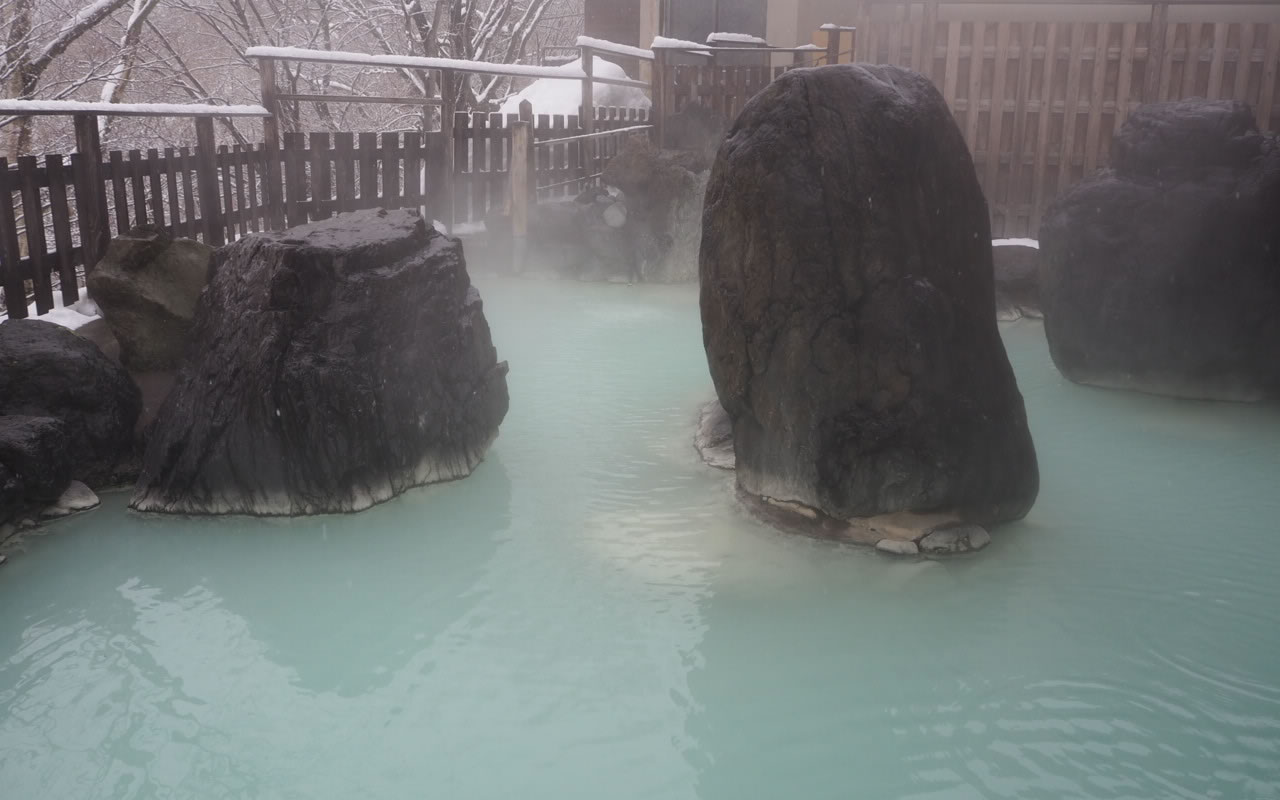 Kyounso, Matsukawa Onsen, Iwate Prefecture
https://www.kyounso.jp/sp/
The ways you can experience onsen without undressing or sharing the bath with others are:
- Use a private bath "Kashikiri-buro"
- Stay at a hotel or inn that has rooms with a private onsen spa
- Take a large communal bath by avoiding busy times
- Wearing Yuamigi
- Visit Hot Springs Where You Can Wear Swimwear
- Can I find natural hot springs with swimwear in Tokyo?
- Natural Hot Springs in Tokyo Islands
Suggestion 1 -
Use a private bath "Kashikiri-buro"
Some Japanese inns (Ryokan) and onsen spas offer reservable hot spring baths called Kashikiri-buro (貸切風呂) for exclusive use. With these, you can enjoy the Japanese bathing style without seeing other people in the bath or changing area.
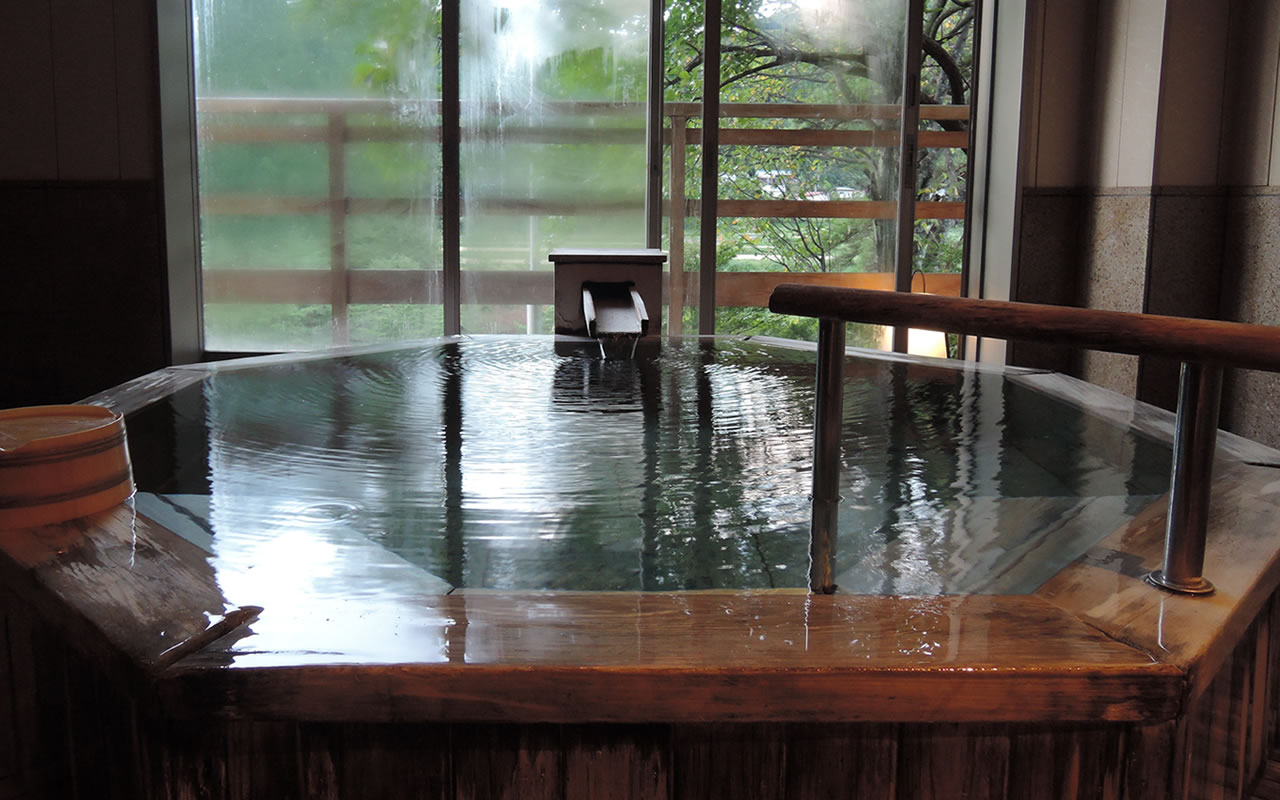 Kashikiri-buro at Wakatakenosho, Kinugawa Onsen, Tochigi Prefecture
https://wakatakenosyou.co.jp/
Upside to Kashikiri-buro
If you're new to Japanese-style hot springs, there's no need to feel nervous.
How to take a Japanese Bath
At a traditional ryokan, you can relax in a private open-air bath and enjoy the view of a Japanese garden.
Downside to Kashikiri-buro
- There is usually a time limit, often between 45 and 50 minutes.
- An extra fee may be charged for use.
- You may need a reservation.
- Some places offer private baths on a first-come, first-served basis. If they are full, you might not be able to use one.
How to request a private bath Kashikiri-buro
There are three options to use a private bath, and the process depends on the facility. First, ask about the availability of Kashikiri-buro at the onsen inn or spa where you plan to stay.
1. Reservation required
Some onsen inns require reservations. If so, book a kashikiri-buro when you reserve your room.
2. Reservation upon check-in
You can request and book a kashikiri-buro when you check in. Some places offer private baths on a first-come, first-served basis, so if one is available, you can use it.
3. Same-day request
You can also visit an onsen inn or spa and ask at the front desk to use a Kashikiri-buro. If one is available, you can use it.
Suggestion 2 -
Stay at a hotel or inn that has rooms with a private onsen spa
At some onsen inns and hotels, you can book a room with a private hot spring bath. This means you can enjoy the bath in complete privacy. Luxury inns often have guest rooms with open-air baths, so you can relax in the hot spring while surrounded by nature, all from the comfort of your room.
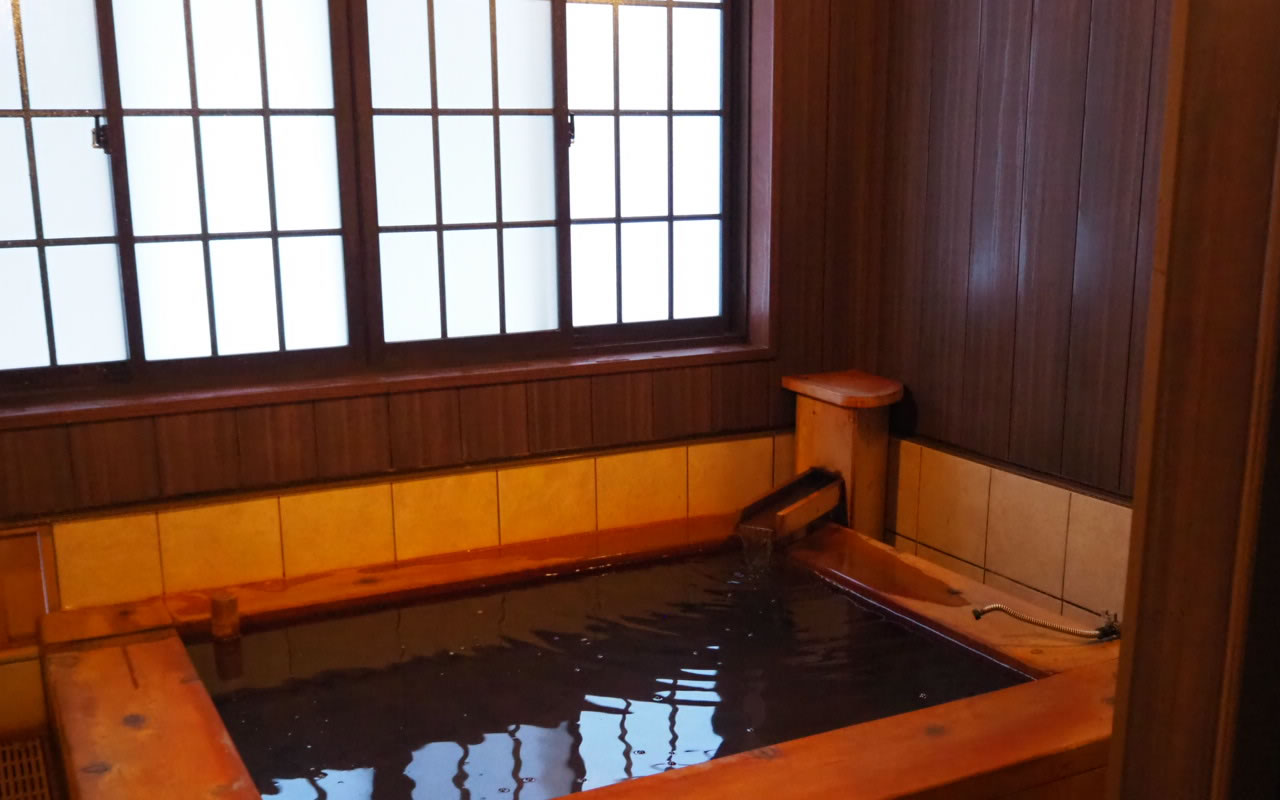 Onsen in room at Hikage Onsen, Akita Prefecture
https://hikage.club/
Upside to rooms with Onsen bath:
Unlike private baths that require a reservation for a specific time, you can use the hot spring whenever you like.
Downside to rooms with Onsen bath:
This option is usually only available for higher-end rooms, so it costs more than standard rooms.
Suggestion 3 -
Take a large communal bath by avoiding busy times
The large communal bath can get crowded at certain times, so if you avoid peak periods, you're less likely to have to share the space. While it's not completely private, you might be lucky and have the bath to yourself.
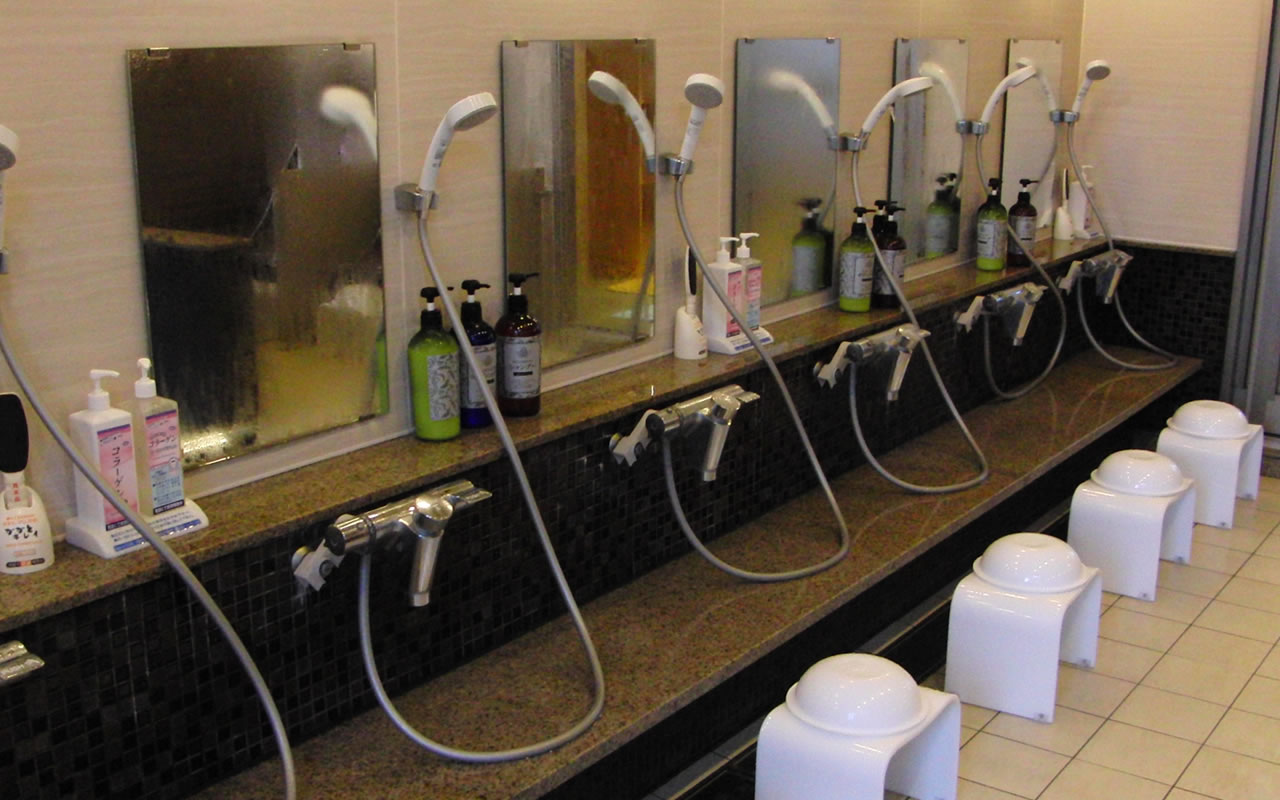 Miyamotoke, Chihibu Saitama Prefecture
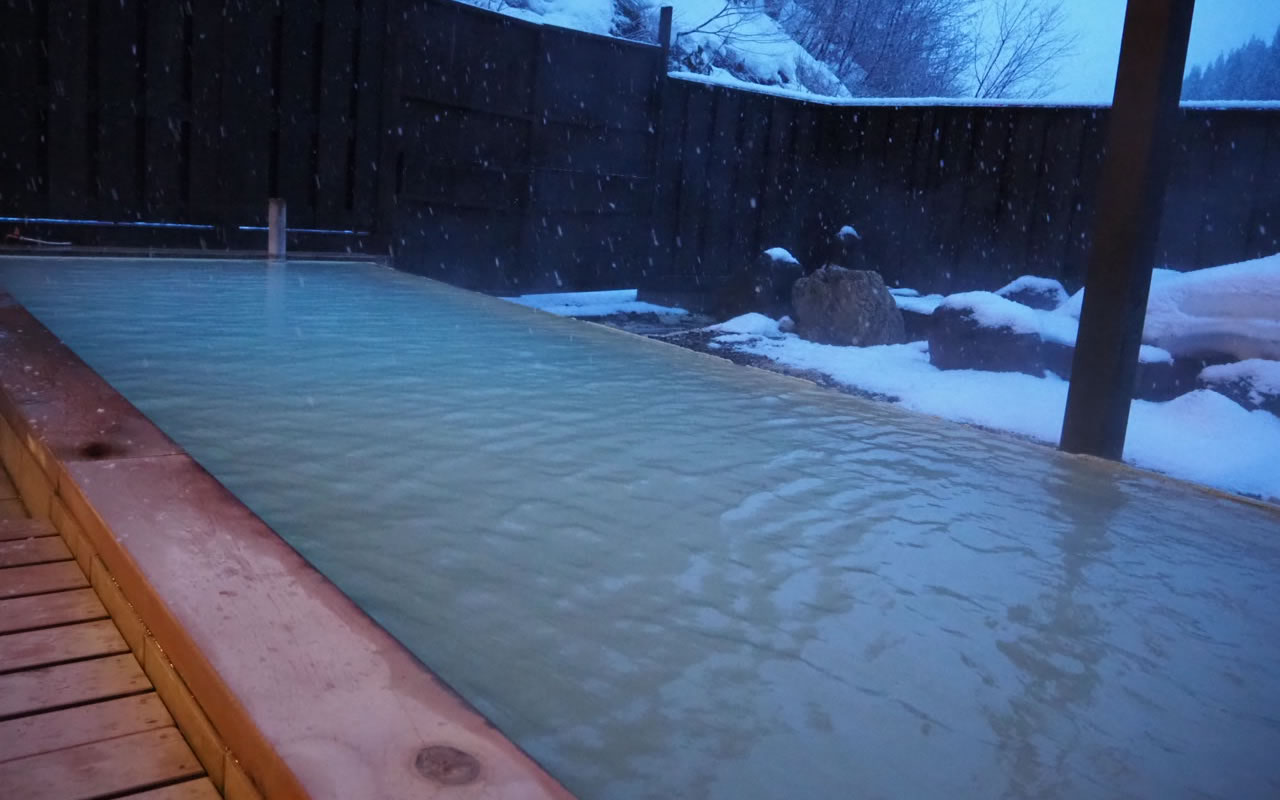 Hikage Onsen, Akita Prefecture
When is the large public bath most crowded?
At onsen inns, it often gets crowded about an hour after dinner. People are generally advised to wait at least 40 minutes after eating before entering the hot spring to avoid sudden changes in blood pressure. Many guests also choose to bathe at least 30 minutes before dinner to avoid putting extra strain on their bodies.
How to try taking an onsen bath alone at a large public bath
- Head to the public bath and enjoy onsen right after checking in. An early check-in is recommended.
- Bathe late at night or very early in the morning. Some onsen inns offer 24-hour access to their baths.
- Avoid busy days: Fridays, weekends, and national holidays.
- At large hot spring hotels that accommodate group tours, try to bathe before the arrival of those groups to enjoy a less crowded experience.
It might take a little extra effort, but you can check the large communal bath to see how crowded it is. If there are a lot of people, you can adjust your bathing time.
I usually visit the hot spring during less crowded times, so I’ve been alone in the large communal bath several times. Even among Japanese people, especially young women, many prefer to bathe alone. Give it a try and see if you can have the bath to yourself!
Suggestion 4 -
Wearing Yuamigi
A Yuamigi (湯浴み着) is a special bath dress that lets you enter an onsen while wearing clothes. Unlike swimsuits, yuamigi are loose-fitting. They are simple garments, similar to a one-piece bathrobe, and are usually meant for one-time use.
A yuamigi is a special bathing garment designed for people who feel uncomfortable in public baths or have body scars and want to bathe without worrying about others’ eyes. Traditional hot spring facilities often have mixed-gender baths, and in such places, women are encouraged to wear a Yuamigi.
Where to get Yuamigi
You can buy or rent a yuamigi at some onsen inns and hotels. Before deciding not to use the hotel's hot spring, ask about yuamigi when booking your room.
Upside to Yuamigi
Yuamigi for one-time use are affordable, usually costing between 1,000 and 2,000 JPY. If you rent one, it typically costs about 300 to 500 JPY.
Downside to Yuamigi
Yuamigi gets wet after bathing. You’ll need to change clothes in the dressing room afterward.
You can only buy or rent yuamigi at certain facilities. Some places do not allow you to bring your own, so it’s important to check the rules of the hot spring you plan to visit in advance.
Since yuamigi are not common even among Japanese people, other guests might look a bit puzzled if someone enters the large communal bath wearing one. Japanese people are taught from childhood that even towels are not allowed in the bath, so wearing clothing in the bath is unusual. In these situations, try smiling and saying, “This is a yuamigi that’s allowed in the onsen. Onsen OK-na yuamigi desu,” to help others understand.
Where to buy a Yuamigi
Yuamigi are usually hard to find in regular stores, so most people buy them online. Keep in mind that some facilities don’t allow you to use your own yuamigi for hygiene reasons, so check before buying one.
Amazon - Bathing wears, Yuamigi
https://link.amazon/B03VAr3Gx
Suggestion 5 -
Visit Hot Springs Where You Can Wear Swimwear
There are only a few places where you can enter hot springs in a swimsuit, but they do exist. Many of these places are like heated leisure pools or spas that use natural thermal water.
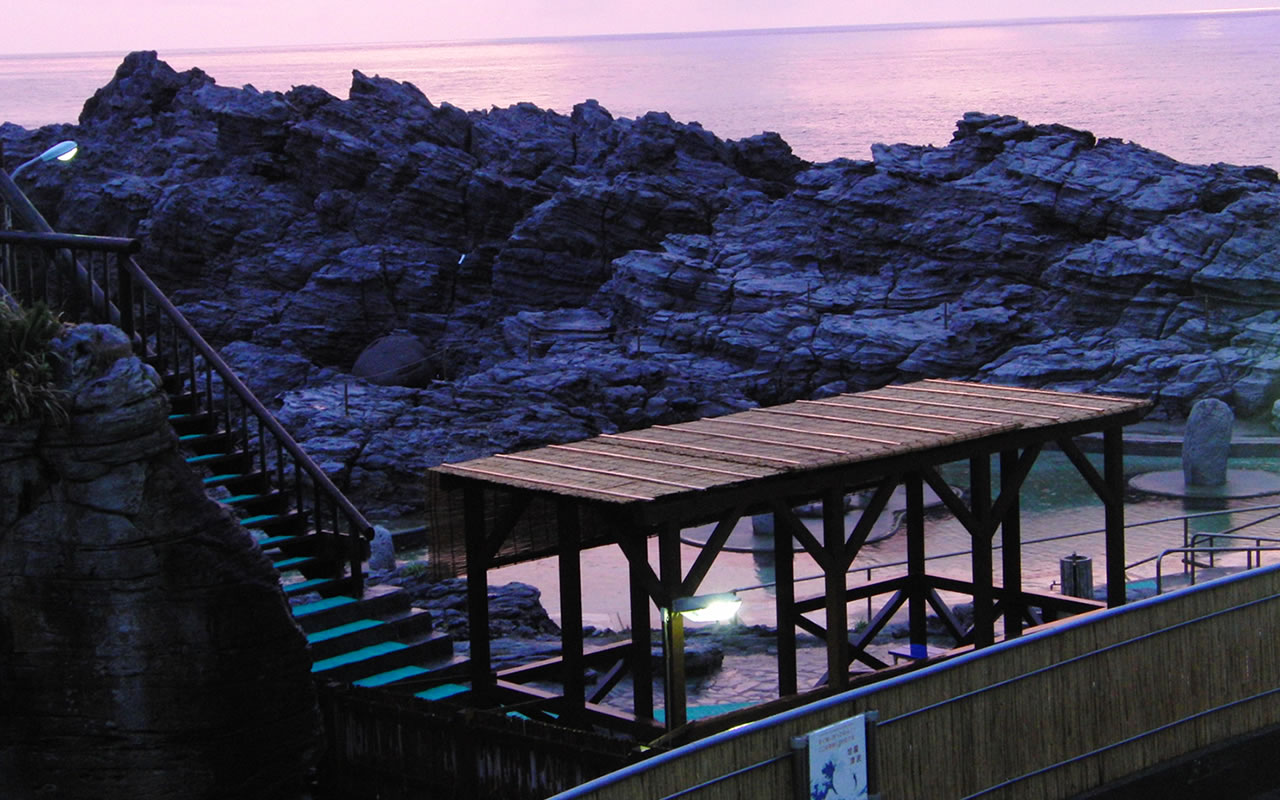 Kozushima Onsen Hoyou Center
Upside to onsen with swimwear
Downside to onsen with swimwear
- You'll probably need to change clothes in the same area as other guests.
- Depending on the water quality, the elastic in regular swimwear may stretch out or change color.
Can I find natural hot springs with swimwear in Tokyo?
Yes, you can. Find them in Tokyo Islands
Some hot springs on the Tokyo Islands invite you to relaxation while wearing a swimsuit. Although reaching these islands from central Tokyo requires a boat or a plane, the journey is well worth it for the unique and memorable experiences that await you.
Keep in mind that some locations are right by/in the sea, deep in nature, far from changing rooms or restrooms, so they may not be suitable for everyone unless you're feeling adventurous. It's a good idea to do some research before you go.
Upside to Hot springs in Tokyo Islands
On small islands like Shikinejima, you might be able to walk between your accommodation and the hot springs in your swimsuit. (If you take a taxi or bus while still wet, you will be denied a ride.)
Downside to Hot springs in Tokyo Islands
Ferry services to the Tokyo Islands can get canceled if the sea is rough. This might force you to stick around longer than you planned, so it's a good idea to keep your schedule flexible. Make sure to book your accommodation ahead of time, but some places might let you change your reservation if the ferry times shift.
No language support is expected, so try to get the most out of an AI translator.
Tokyo Islands
https://tokyoislands.jp/
Natural Hot Spring Spas in Tokyo Islands
Oshima Island 大島
Motomachi Hamanoyu 元町浜の湯
You can soak in the hot spring while gazing out at the vast ocean.
https://www.town.oshima.tokyo.jp/soshiki/kankou/hamanoyu.html
Niijima Island 新島
Yunohama Roten Onsen 湯の浜露天温泉
You can unwind in the hot spring on a rocky hill by the coast while watching the sunset dip into the sea.
https://niijima-info.jp/spot/2390/
Shikinejima Island 式根島
Shikinejima is home to three open-air hot springs set amidst nature, all of which are free to use. They are located in thrilling spots—some so close to the sea that they are practically in the ocean. The water has a high salt content, so your skin might feel sticky once it dries; it is a good idea to bring a plastic bottle filled with fresh water to rinse off afterward. Embrace the sense of adventure and enjoy the experience.
https://shikinejima.tokyo/hotspring/
Matsugashita Miyabiyu 松が下雅湯
Overlooking the sea, this brown hot spring lies beneath a bonsai-like pine tree. Bathing is free of charge.
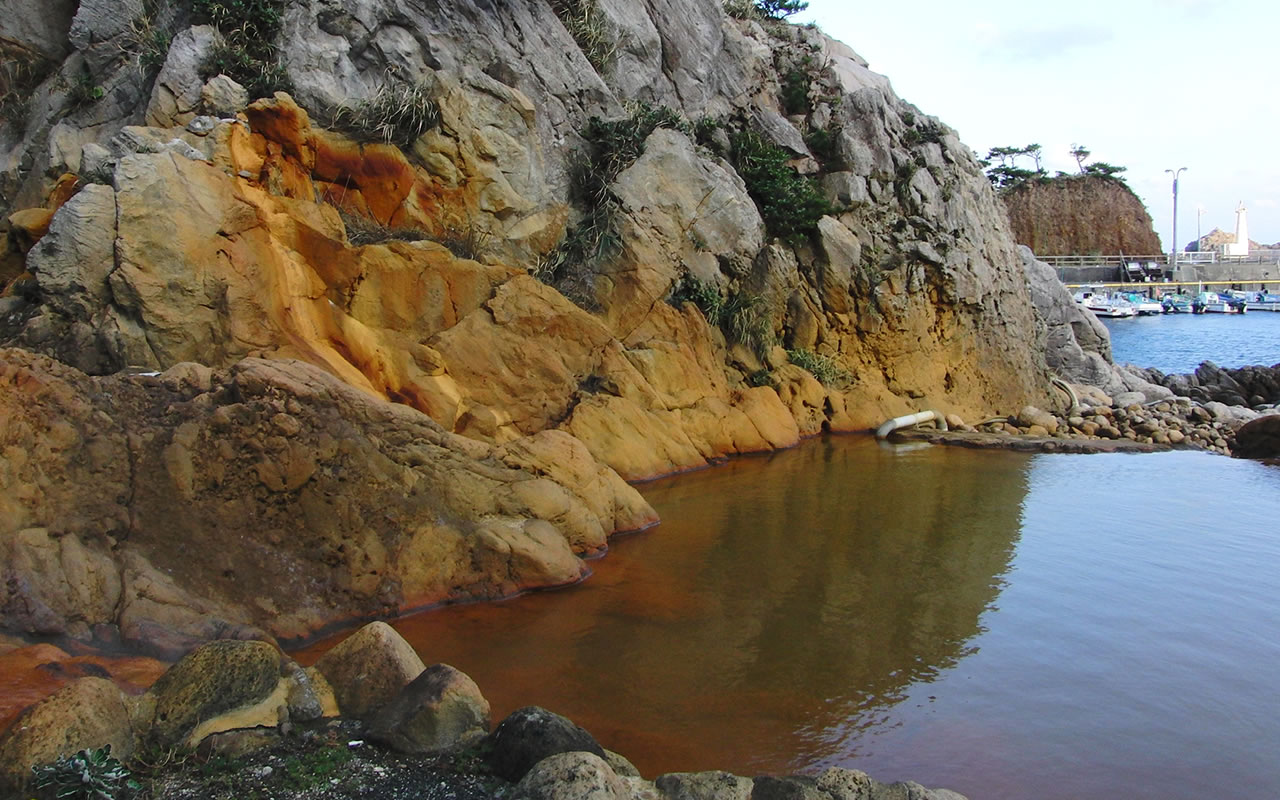 Matsugashita Miyabiyu
Jinata Onsen 地鉈温泉
This hot spring is on the rocky shore and can be reached by going down a long set of stairs. Visit it during low tide for the best experience. Be careful, as some areas have very hot water. Find a safe spot and enter the water slowly. Bathing is free of charge.
Ashitsuki Onsen 足付温泉
This clear hot spring, found only on Shikinejima, is nestled among rugged rock formations and offers a breathtaking view of the ocean right in front of you. You can enjoy a bath here according to the ebb and flow of the tide. Bathing is free of charge.
Shikinejima also has a public hot spring bath called Ikoi-no Ie, which is not free and requires undressing.
Miyakejima Island 三宅島
Furusato-no Yu ふるさとの湯
Furusato-no Yu is a typical Japanese communal bath, but it allows swimsuits in the open-air bath section.
https://www.miyakejima.gr.jp/play/furusatonoyu/
Kozushima Island 神津島
Kozushima Onsen Hoyou Center 神津島温泉保養センター
A large hot spring spa facility. It allows bathing with swimsuits in the open-air bath.
https://kozushima.com/kanko/meisho/other/230/
Hachijojima Island 八丈島
Uramigataki Onsen 裏見ヶ滝温泉
You can soak in the hot spring while enjoying the view of a waterfall down there. Bathing is free of charge.
https://www.hachijo.gr.jp/specials/hotspring/
