

What does "Shin" mean when you see it in Japanese station names?
If you travel by train in Japan, you might notice that some stations have "Shin" in their names, like Shin-Yokohama or Shin-Osaka.
Shin means new
Shin 新 means "new" in Japanese. Stations with Shin in their names were built after the original ones. These new stations are added because the older stations are already crowded with train lines, so it’s hard to add more tracks there.
Watch out for "Shin" when looking for your station
Stations with "Shin" can sometimes make it hard for passengers to recognize the right stop. It’s easy to mix up stations with and without "Shin," which might lead you to get off at the wrong place.
What happened in my case:
The first time I rode the Tobu Railway, I accidentally got off at Shin-Isesaki instead of my actual stop, Isesaki. I only realized my mistake after leaving the ticket gate. Luckily, Isesaki Station was next to Shin-Isesaki, and since I wasn’t in a hurry, I enjoyed the 20-minute walk. In my case, both stations were on the same line, but sometimes stations with and without "Shin" are on different train lines, and it can be much harder to get between them. Even if they are on the same line, trains might only come once an hour or less. It would be much more stressful to make this mistake on the Shinkansen.
Be careful, especially when you take a Shinkansen
It’s important to know that many Shinkansen bullet trains leave from or arrive at stations with "Shin" in their names. Shin-Yokohama (新横浜), Shin-Fuji (新富士), Shin-Osaka (新大阪), etc.: Shinkansen trains run at these stations with Shin.
For instance, Yokohama Station (横浜駅) and Shin-Yokohama Station (新横浜駅) are over 5 kilometers apart. It only takes about 11 to 13 minutes by local train, but it can be tough for first-time visitors to find the right train quickly.
Even Japanese speakers sometimes get confused, so I hope travelers will be careful and enjoy their train journeys.
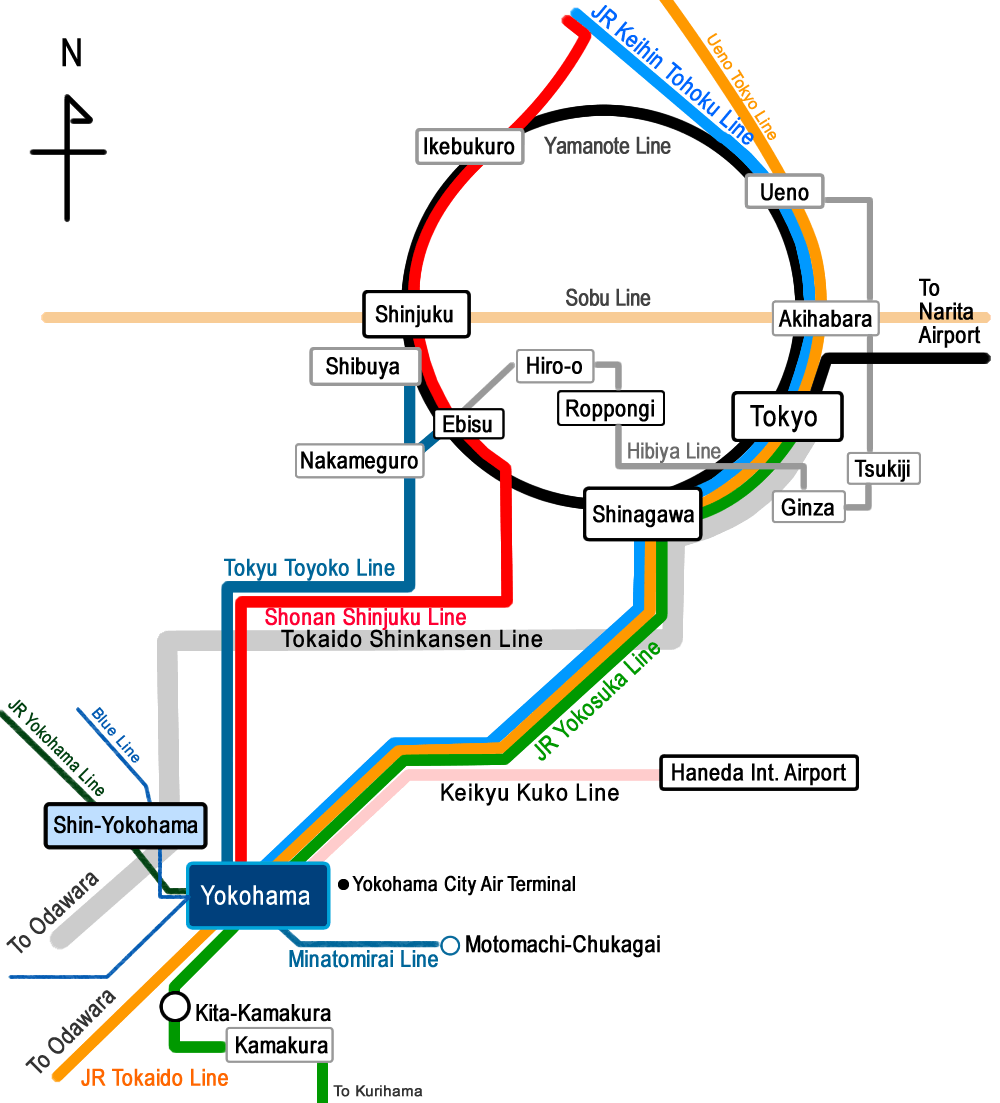
Shin-Yokohama Station and Yokohama station
