
Attractions in Omiya, a transport hub with easy access from Tokyo
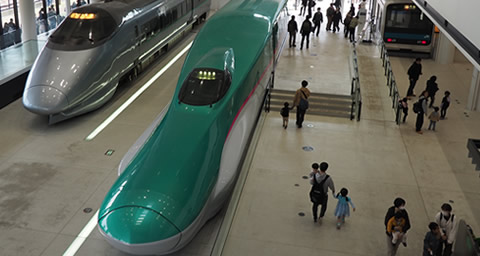
Omiya in Saitama City is known for its large interchange station, "Omiya Station," which is always crowded with commuters heading to and returning from Tokyo. People using Omiya Station just to take trains tend to overlook the charm of Omiya, but Omiya has various attractions as the town with over a 2400-year history.
Omiya, a historical railway town
Omiya is a district in Saitama City, located in Saitama Prefecture, just north of central Tokyo. Omiya is a historic area that grew around the venerable Hikawa Shrine, a spiritual center with deep roots. Since the Edo period (1603–1868), it thrived as a post town along the Nakasendō, one of Japan's major travel routes. The opening of Omiya Station in 1885 transformed the area into a key railway hub, earning it the nickname "railway town." With that improved access from Tokyo, Omiya once became a popular retreat destination, having exclusive Japanese-style inns at the time. Today, while Omiya is primarily known as a residential district, it also boasts unique attractions that preserve its rich historical legacy.
Omiya is within easy access from Tokyo
Omiya is home to Omiya Station, where the Shinkansen (bullet train) stops on its route from Tokyo to various cities in northern Japan and the Hokuriku region. Omiya Station is also an excellent choice for travelers heading to Tokyo, as the JR line from Omiya Station connects directly to major stations in Central Tokyo, including Ikebukuro, Shinjuku, Tokyo, and Ueno.
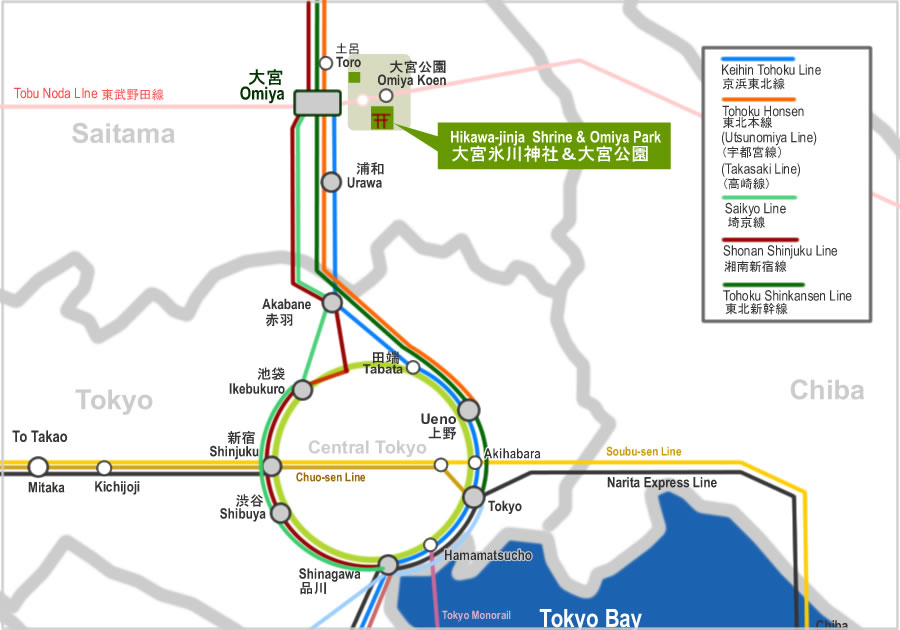
The train ride from Ueno to Omiya is within 30 minutes. The area around Omiya Station also features several business hotels, making it convenient for those looking to stay overnight while visiting Tokyo.
Must-sees in Omiya
Do not overlook Omiya without exploration. Omiya is actually a destination worth visiting for tourists. There are various restaurants and izakaya bars around Omiya Station, so visitors will not have trouble finding a place to eat while exploring the area.
The Railway Museum 鉄道博物館
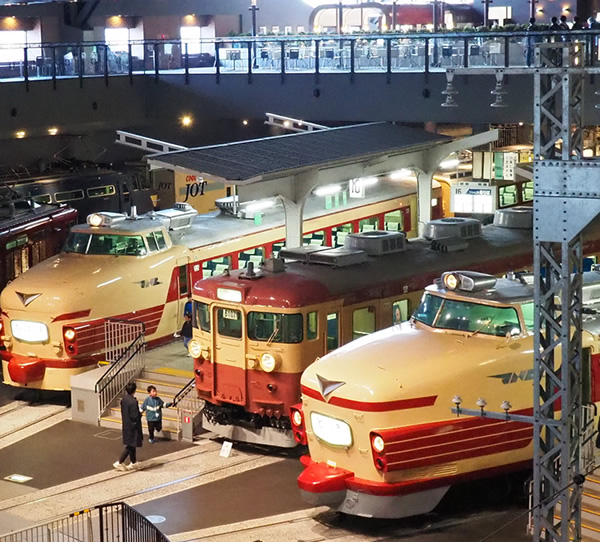
The Railway Museum specializes in trains, featuring a large exhibit room that displays 36 actual trains, ranging from bullet trains to steam locomotives. Visitors can actually step inside the trains and take photos. The museum comprises five sections, including hands-on experiences that allow visitors to learn about train operations, enabling both adults and children to enjoy the museum throughout the day. On the second floor of the building, numerous train models are on display, making it a must-see for railway enthusiasts.
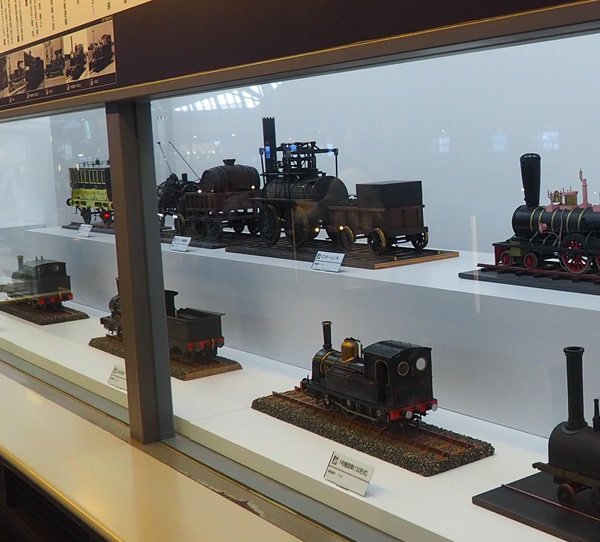
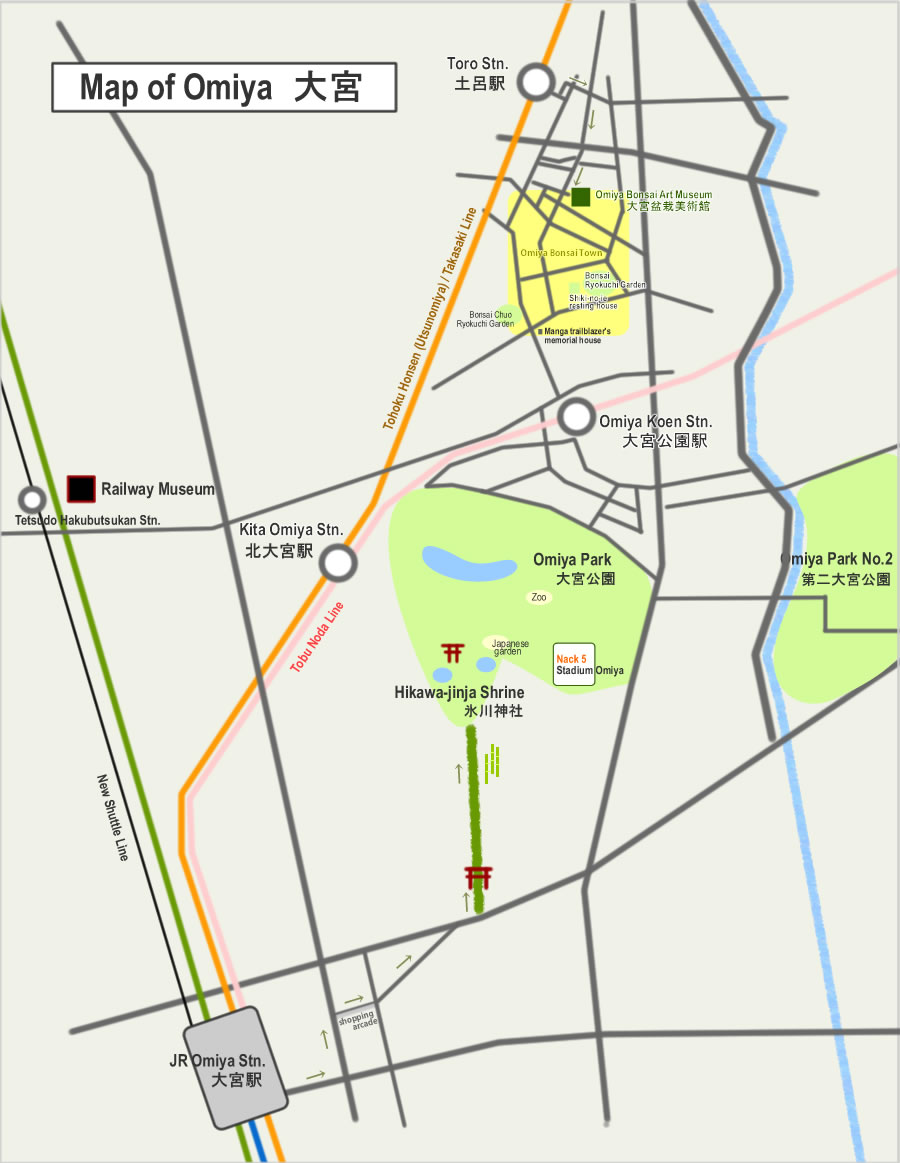
To get to the Railway Museum, take the New Shuttle train from Omiya Station. It's a quick one-stop ride. Disembark at Tetsudo Hakubutsukan Station (Railway Museum Station) and then walk for about one minute to reach the museum.
The Railway Museum
https://www.railway-museum.jp/e/
Hikawa-jinja Dhrine
(Musashi Ichinomiya Hikawa Jinja 武蔵一ノ宮氷川神社)
If you are familiar with Jinja (shrines) in Tokyo, you might notice that there are a number of shrines called Hikawa-jinja. The Hikawa-jinja in Omiya is the main shrine of all the Hikawa-jinja shrines around Tokyo area, and has more than 2400 years of history. The name of the district “Omiya”, meaning “a large shrine” in Japanese, is derived from this shrine. The Hikawa-jinja has a 2km long approach lined with beautiful zelkova trees on both sides, which is a symbol of Omiya.
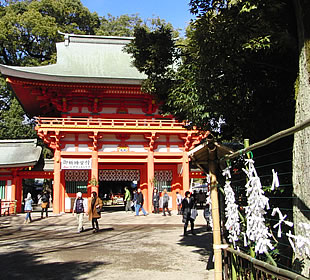
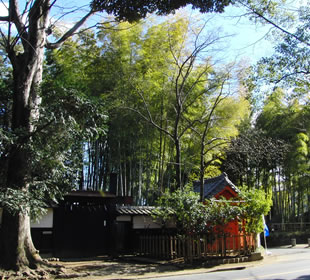
Hikawa-jinja
https://musashiichinomiya-hikawa.or.jp/
Omiya Park (Omiya Koen 大宮公園)
Omiya Park, home to the Hikawa-jinja Shrine, covers an impressive 67.8 hectares that includes a baseball stadium, velodrome, and a football stadium. This park was once a forest resort with exclusive Japanese-style inns and is now a popular public place for cherry blossom viewing, featuring around 1,200 cherry trees. The park also has a small zoo for free admission.
Omiya Park is divided into three zones: the main park, which includes Hikawa-jinja, the second park, and the third park. The second and third parks are primarily intended for residents of Saitama City, where many families come to enjoy sports and outdoor activities on weekends.
NACK5 STADIUM OMIYA
The football stadium in Omiya Park is the home of RB Omiya Ardija. On game days, many people in orange uniforms gather on their way to the stadium at Omiya Park.
Nack5 Stadium Omiya
https://www.omiyaparksoccerstadium.com/
OMIYA ARDIJA football club
https://www.ardija.co.jp/
The Omiya Bonsai Village
Omiya Bonsai Village refers to a district where bonsai traders have come together to create gardens for selling bonsai trees. Although it’s called a "village," it is not an actual village but is located in a residential area near Omiya Park. Each year, around the beginning of May, a bonsai festival is held in this district, attracting bonsai enthusiasts who come to purchase their favorite trees and pots.
Historically, Bonsai is a major industry in Omiya. The Bonsai Village has celebrated its 100th anniversary in 2025.
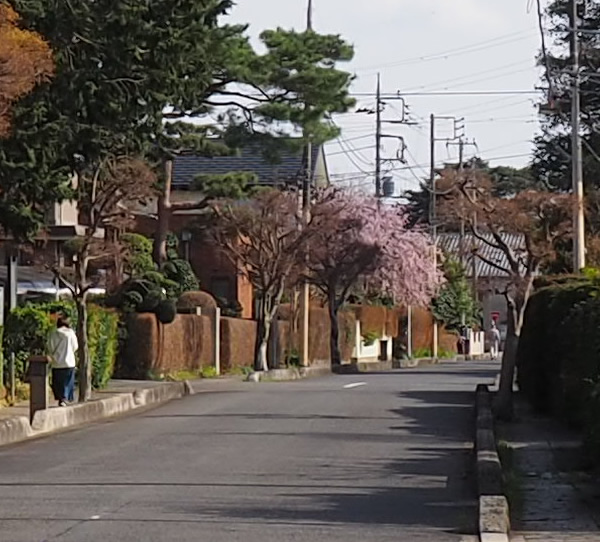
The Omiya Bonsai Village. There are several Bonsai gardens along the street.
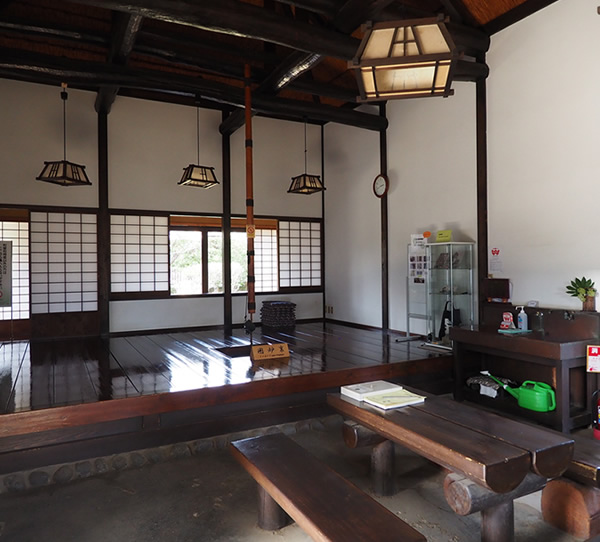
The Bonsai House of Four seasons, a rest house in the Bonsai Village, open for free.
The Omiya Bonsai Village
https://www.bonsai-art-museum.jp/en/about/omiya/
The Omiya Bonsai Art Museum (Omiya Bonsai Bijutsukan 大宮盆栽美術館)
The highlight of Omiya attractions. The Omiya Bonsai Art Museum is the world's first public museum dedicated to Bonsai art, attracting numerous visitors across the world. The museum showcases stunning bonsai masterpieces set within a traditional Japanese garden. Even those unfamiliar with Bonsai will be amazed to see trees 400 years old and even older.
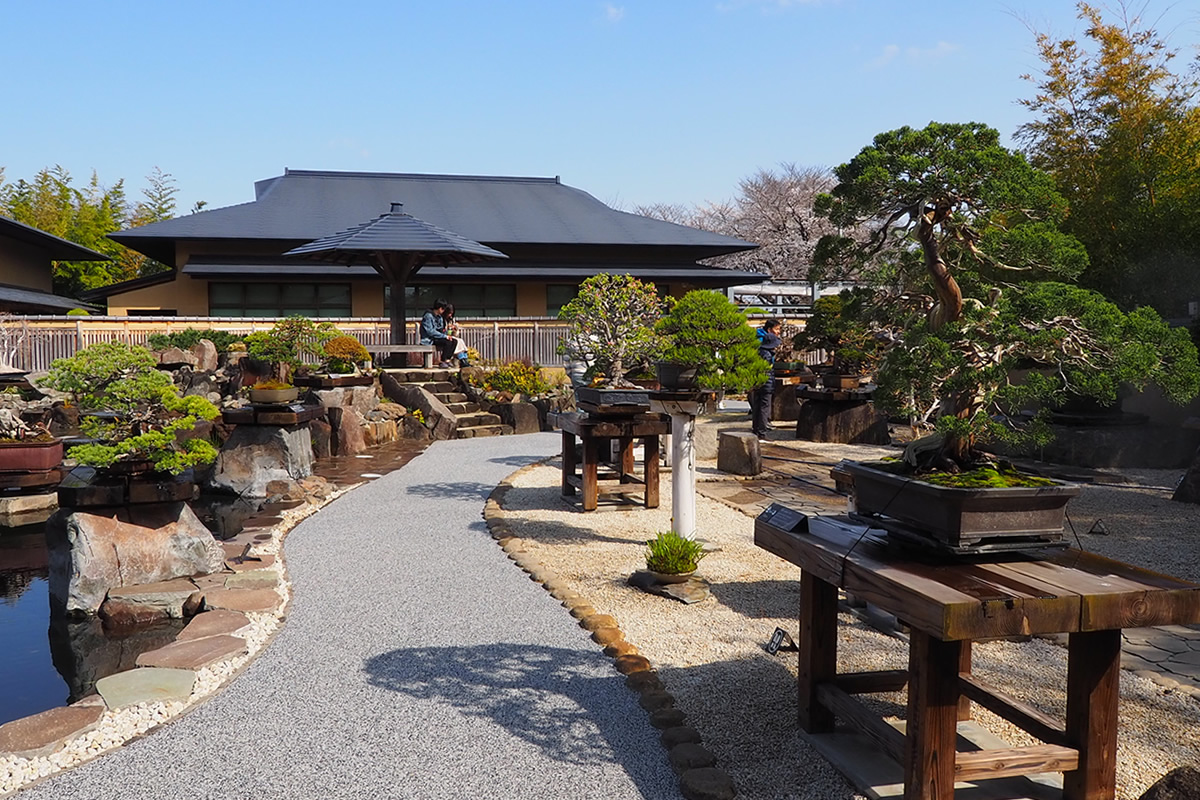
Getting to The Omiya Bonsai Art Museum
A 5-min walk from Toro Station (East Exit) on the JR Utsunomiya Line/Shonan-shinjuku Line/Ueno-tokyo Line.
Omiya Bonsai Art Museum
https://www.bonsai-art-museum.jp/en/
Getting to Omiya from Central Tokyo
From Shinjuku station to Omiya Station
Approx. 29min. by JR Shonan Shinjuku Kaisoku Line
Approx. 33min. by JR Saikyo-sen Kaisoku Line
From Ueno station to Omiya station
Approx. 27min. by JR Takasaki Line
Approx. 26min. by JR Tohoku Honsen Line (Utsunomiya Line)
Approx. 40min. by JR Keihin Kyuko Line
Getting to Hikawa-jinja Shrine/Omiya Park from Omiya Station
It is about a 20-minute walk from JR Omiya Station to Hikawa-jinja Shrine.
Form Omiya Koen Station to Omiya Park is about a 5 minute on foot.
To visit Hikawa-jinja Shrine, walking from JR Omiya Station is a good option because you'll get to enjoy the lovely path that leads to the Shrine along the way.
Related Information
Saitama Tourism and International Relations Bureau
https://stib.jp/
